Online Yoga Classes: Start at Home, Practice Free & Build Yoga for Life
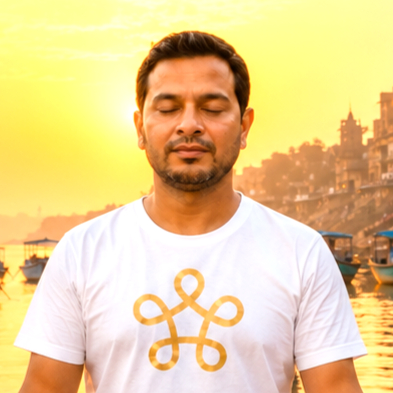

There is a strange thing about modern wellness.
We have more fitness apps, videos, smartwatches and health advice than any generation before us, yet finding forty-five quiet minutes for ourselves can still feel difficult.
A yoga studio may be only a few kilometres away, but add traffic, changing work schedules, family responsibilities or travel, and a simple yoga class suddenly becomes a two-hour commitment.
That is where online yoga classes change the equation.
Your bedroom can become your practice space. Your terrace can become your studio. A hotel room can become your yoga room while travelling.
You don't need the perfect setting.
You need enough space for a mat—and enough willingness to begin.
Current keyword datasets show substantial interest around searches such as online yoga classes, free online yoga classes, live online yoga classes, online yoga classes for beginners and yoga classes online. Different SEO platforms report very different volumes, but they agree on one thing: people are actively looking for convenient ways to practise yoga from home. (SEO Sandwitch)
But this article isn't about convincing you that online yoga is convenient.
You already know that.
The more interesting question is:
Can something that begins on a screen eventually become yoga for life?
Yes—but only when the screen stops being the destination and becomes the doorway.
What Are Online Yoga Classes?
At their simplest, yoga classes online allow you to practise with an instructor without physically travelling to a studio.
They generally come in three forms:
Recorded yoga videos you watch whenever you want
Live group yoga classes through video
Live personalised or small-group sessions with interaction
All three can be useful.
Recorded classes offer flexibility.
Free videos make yoga accessible.
Live classes introduce something harder to replicate through an algorithm: a real routine with a real teacher.
This distinction becomes particularly important when you are new.
A beginner doesn't only need another sequence of poses.

You need to understand when to slow down, how to modify a movement, when not to force flexibility and how to gradually build a sustainable practice.
If you're completely new, start with our Yoga for Beginners series before worrying about advanced asanas.
Why Are Online Yoga Classes Becoming Part of Modern Life?
Convenience is the obvious answer.
But there is something deeper happening.
For years, wellness required us to go somewhere.
Go to the gym.
Go to the studio.
Go to a retreat.
Go to the mountains.
Online yoga reverses that relationship.
The practice comes to you.
You can practise before your first meeting, during a quieter afternoon or after returning from work. If your job moves you between cities, your teacher does not necessarily have to change every time your location does.
This is why terms such as online yoga, virtual yoga classes and online yoga classes for beginners have become meaningful search categories rather than niche alternatives.
Keyword research also suggests that beginner-specific online queries can be less competitive than broad terms such as simply “yoga classes,” making them especially relevant for someone genuinely trying to start. (Clicks Resources)
The real benefit, however, is not that yoga becomes easier to access.
It is that yoga becomes harder to excuse away.
Your home doesn't need to look like a yoga studio.It only needs enough space for you to show up.START YOUR YOGA JOURNEY WITH JANMKATHA →
Looking for Yoga Classes Free Online? Start There.
There is absolutely nothing wrong with searching for free yoga classes online.
In fact, beginners probably should explore before committing

A free yoga class can help you answer questions that no SEO article can answer for you:
Do I actually enjoy this teacher?
Do I prefer practising in the morning or evening?
Do I like a slower class or something more active?
Do I feel comfortable learning yoga online?
Can I realistically fit this practice into my life?
Free yoga content lowers the psychological barrier to beginning.
And that is valuable.
The problem begins when trying yoga gets confused with building a yoga practice.
You watch a fifteen-minute video Monday.
A completely different instructor on Saturday.
A difficult flexibility routine two weeks later.
Then nothing for ten days.
You are consuming yoga.
But you may not yet be practising it.
The best yoga class is not necessarily the most impressive one. It is the one you keep returning to.
Free Yoga Videos vs Live Online Yoga Classes
Imagine learning to swim from videos.
You could understand the movements.
You could learn breathing techniques.
You could watch excellent swimmers for hours.

But eventually, having someone observe what you are actually doing changes the learning process.
Yoga can be similar.
A recorded yoga class tells you:
“Move into Downward-Facing Dog.”
A teacher can notice that you need to bend your knees.
A video says:
“Hold Tree Pose.”
A live instructor can remind you that wobbling is not failure.
Recorded content gives you information.
Live online yoga classes can give you interaction, progression and accountability.
Neither format has to replace the other.
Use free yoga videos to explore.
Use short routines when travelling.
Use live classes when you want structure.
What matters is creating a system that eventually reduces the amount of daily decision-making.
Instead of asking:
“Which yoga video should I watch today?”
You begin knowing:
“This is my yoga time.”
A video can introduce you to an asana.A teacher can help you build a practice.PRACTICE LIVE WITH JANMKATHA YOGA →
Online Yoga Classes for Beginners: Where Should You Start?
If you have never done yoga before, do not start by searching for the most advanced pose you can find.
You do not need a headstand.
You do not need extreme flexibility.
You do not need to know Sanskrit.
Your first few weeks should be almost boringly simple.
Learn how to stand consciously.
Learn how to breathe without holding your breath.
Learn Cat-Cow.
Learn Child's Pose.
Learn Cobra.
Explore Downward-Facing Dog.
Try Warrior II.
Discover how difficult Tree Pose becomes when your attention wanders.
And perhaps most importantly, learn Savasana—because yoga also teaches you how to stop doing.
If you need the movements first, continue with 10 Easy Yoga Poses for Beginners: Start Your Practice at Home, One Asana at a Time.
Then ask the second question:
How often should I practise?
Our guide How Often Should You Do Yoga? A Beginner's Guide to Building the Right Yoga Routine goes deeper into frequency, but two or three consistent beginner sessions can be a far more realistic starting point than declaring that you will suddenly practise every day forever.
“I Don't Have an Hour for Yoga.”

You don't necessarily need one.
This is one of the biggest traps in wellness: believing that if you cannot do the perfect version, you should do nothing.
No 60 minutes?
Skip the workout.
No perfect healthy meal?
Order anything.
No full yoga session?
Try again tomorrow.
But tomorrow develops a habit of never arriving.
A twenty-minute practice can still be yoga.
A thirty-minute live class can still change the rhythm of your morning.
A few minutes of breathing can still remind you that your nervous system does not have to move at the speed of your notifications.
If time is your biggest obstacle, explore our 20-Minute Morning Yoga for Beginners at Home routine.
The goal isn't to win an award for duration.
The goal is to make returning easier.
From Online Yoga to Yoga for Life
This is where the conversation becomes more important than search keywords.
People often arrive at yoga looking for something physical:
Flexibility.
Weight management.
A less stiff back.
Better balance.
More movement.
There is nothing wrong with any of those reasons.
But traditional yoga asks a larger question:
What happens when awareness leaves the mat and enters the rest of your life?
You begin noticing your breath.
Then perhaps you notice that your breathing changes whenever you open your work email.
You become more conscious of your body.
Then you notice you have been sitting without moving for three hours.
You learn to slow down in Savasana.
Then you realise you haven't gone to sleep without scrolling through your phone in months.
You start caring about your movement.
Then food, sleep, routine and mental space start becoming part of the same conversation.
That is yoga for life with JanmKatha
Not yoga as another item on a fitness checklist.
Yoga as a quiet influence on how you live.
What Krishna Tells Arjuna About a Balanced Life

The Bhagavad Gita contains surprisingly practical guidance for anyone trying to create a wellness routine.
In Chapter 6, Krishna cautions against extremes—too much or too little food, excessive sleep or insufficient sleep—and describes yoga in the context of moderation in food, recreation, activity, sleep and wakefulness.
Think about how different that is from much of modern wellness culture.
Modern culture often says:
More discipline.
More workouts.
More productivity.
Wake earlier.
Push harder.
Never miss.
Yoga says something more nuanced.
Find balance.
If waking at 4 AM for yoga means sleeping five hours every night, perhaps the schedule is defeating the philosophy.
If an aggressive yoga routine leaves your body constantly exhausted, perhaps more yoga is not actually better yoga.
If your healthy routine makes you anxious every time you miss one day, perhaps discipline has quietly turned into attachment.
Yoga for life should make your life more balanced—not merely more controlled.
Can Something Online Really Feel Spiritual?

It is understandable to hesitate here.
A laptop doesn't immediately evoke spirituality.
The Himalayas do.
A temple does.
The ghats of Kashi do.
A Zoom window probably does not.
But perhaps we are confusing the place of practice with the purpose of practice.
Indian spiritual traditions repeatedly turn attention inward.
The location may support that inward movement, but awareness itself is not geographically restricted.
A person can sit beside the Ganga while thinking continuously about notifications.
Another person can sit quietly in a small bedroom and experience ten genuinely conscious breaths.
Technology does not make a practice spiritual.
But it does not automatically make it superficial either.
It depends on how we use it.
This is where the idea behind JanmKatha becomes particularly meaningful:
Ancient Wisdom. Modern Wellness.
Modern technology can become a bridge through which an old practice enters a modern life.
You do not need to reproduce ancient India in your living room.
You need to understand what the wisdom is asking of you today.
How to Choose the Best Online Yoga Classes for You
Do not choose an online yoga class only because the website looks beautiful.
Ask practical questions.
Is it genuinely beginner-friendly?
A class for beginners should not make you feel that everyone secretly attended ten classes before you arrived.
Are sessions live or only recorded?
Recorded sessions provide flexibility. Live sessions provide more interaction and structure. Decide which you actually need.
Can the routine fit your life?
A brilliant yoga program that clashes with your work schedule is unlikely to become your long-term practice.
Does it teach beyond poses?
Asana matters. But breath, relaxation, routine and awareness are important parts of a richer yoga experience.
Is there a way to try before committing?
Searching for yoga classes free often reflects something perfectly reasonable: people want to know what they are joining before paying. A trial lets you experience the teaching rather than relying only on marketing promises.
Does the philosophy resonate with you?
You are far more likely to stay with a practice when the teacher's approach aligns with what you are actually seeking.
What Can Online Yoga Support?
Yoga should not be marketed as a cure for every health problem.
Medical conditions still require appropriate professional care.
Those benefits also do not always arrive dramatically.
Perhaps the first change is simply that you wake up knowing you have somewhere to be—on your mat.
Perhaps your shoulders feel less forgotten.
Perhaps you spend forty-five minutes without checking social media.
Perhaps breathing slowly starts feeling less unusual.
Wellness often grows through small things repeated.
That is not as exciting as a “30-Day Transformation” headline.
But it is much closer to how sustainable change usually feels.
JanmKatha Online Yoga Classes:
From the Spirit of Kashi to Your Home
At JanmKatha, we do not see online yoga as merely putting a fitness instructor on a screen.
The purpose is larger.
JanmKatha currently offers live, interactive daily 45-minute online yoga sessions, designed around flexible access so members can practise from home or while travelling.
The program emphasises building a lasting habit alongside inner peace, mental clarity and spiritual growth, and it draws its identity from the spirit and heritage of Kashi. (Janmkatha)
The classes are guided by Yogacharya Rahul, whose JanmKatha profile lists more than 16 years of experience. The platform also offers a free trial, while its longer-term heritage plan includes physiotherapy support and diet plans alongside daily online yoga. (Janmkatha)
But JanmKatha's goal is not simply:
“Learn more yoga poses.”
It is to help yoga become part of your daily life.
How you move.
How you breathe.
How you eat.
How you organise your routine.
How you create moments of stillness.
How you become more aware of yourself before asking the world to change around you.
Because eventually, yoga should not end when the online class ends.
The real practice begins when you close the screen and return to your life a little more consciously than before.
Your mat can be anywhere.Your journey still begins within.
Ancient Wisdom. Modern Wellness.Your First Step Towards Enlightenment.
START YOUR JANMKATHA YOGA JOURNEY →


Comments